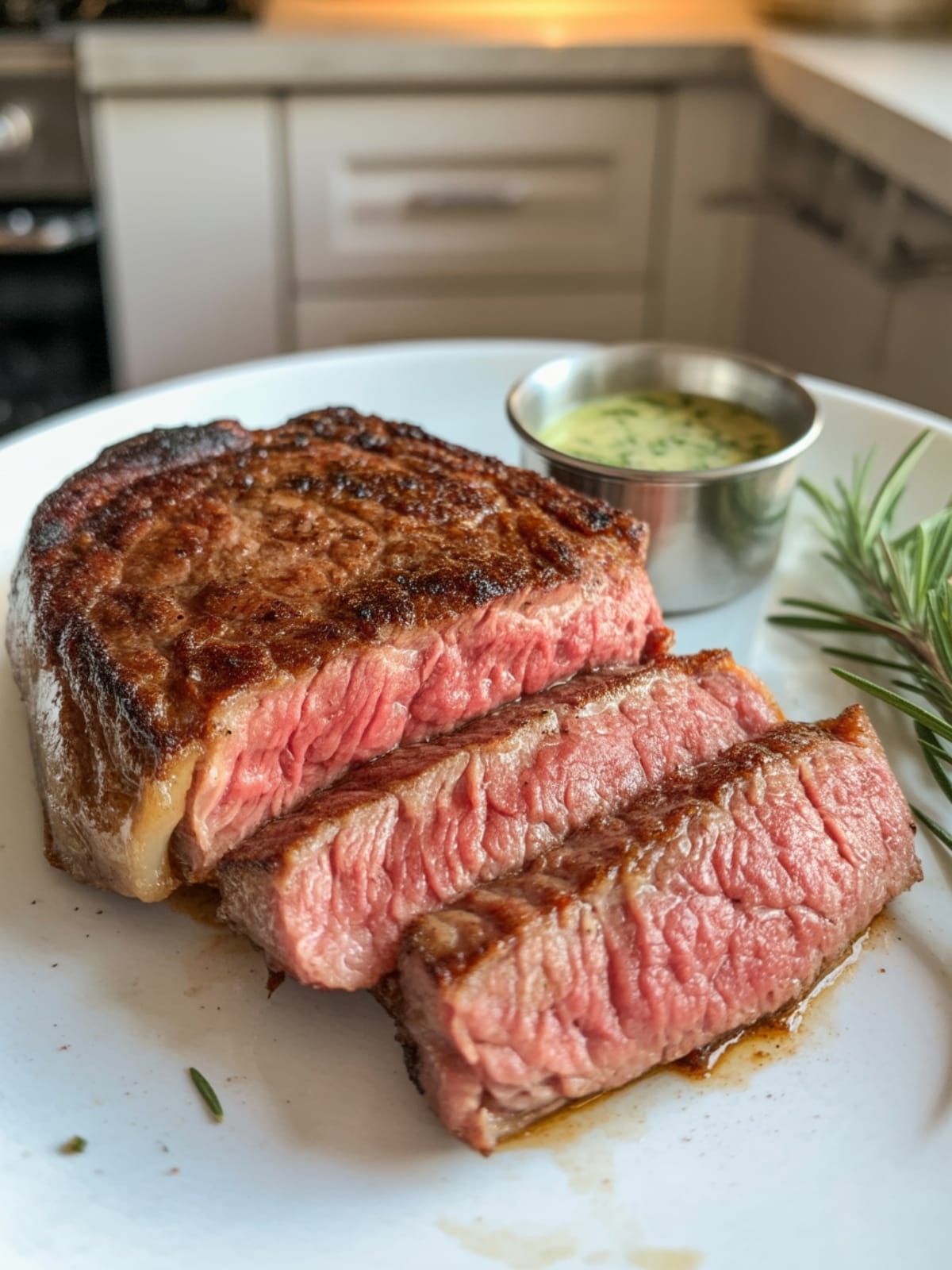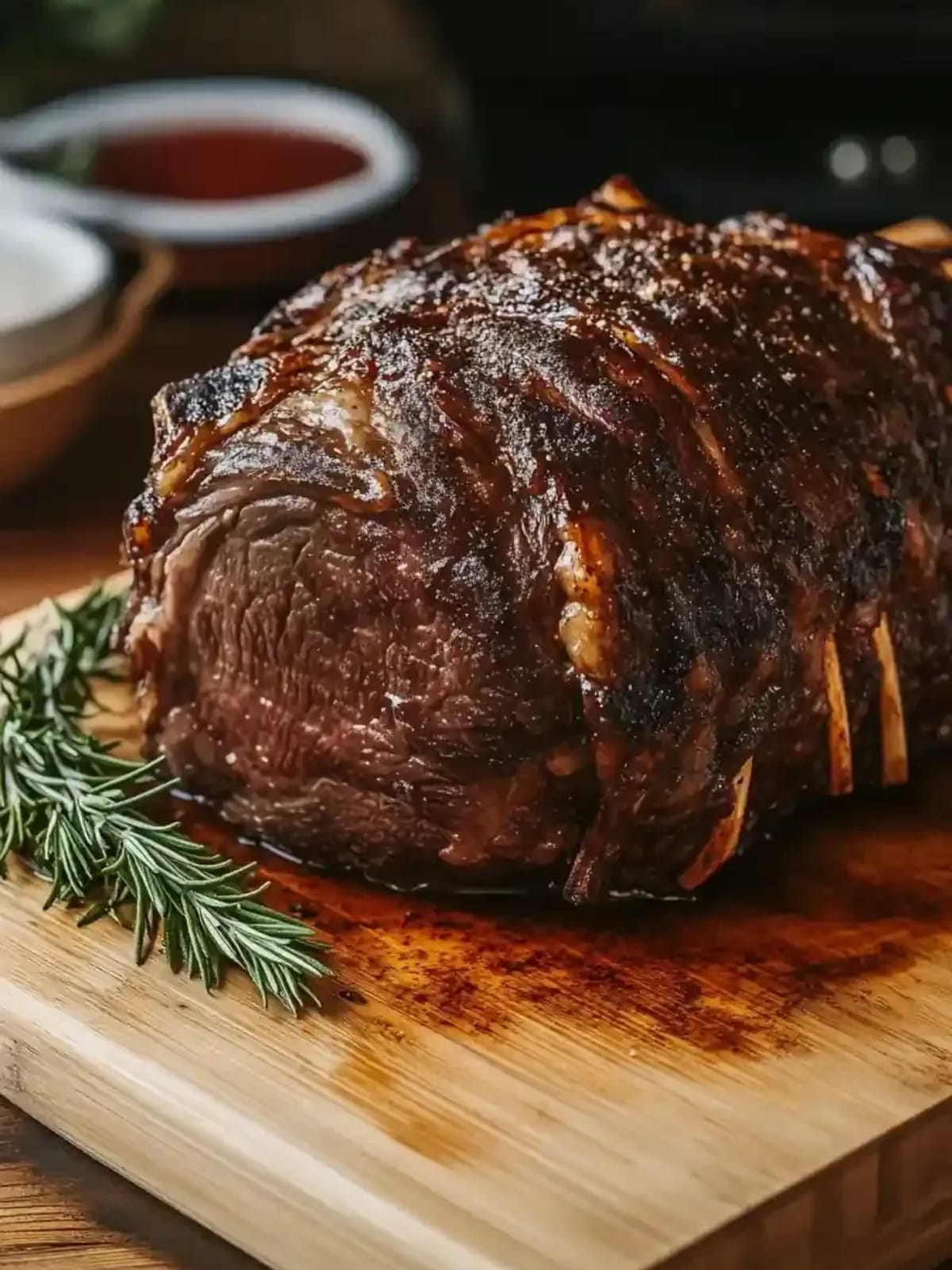
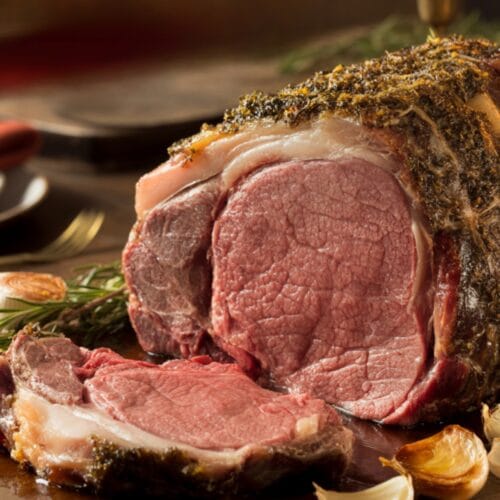
There’s something magical about a perfectly cooked Classic Christmas Prime Rib that commands attention at the holiday table. That moment when you slice into a gorgeous roast to reveal a rosy pink center surrounded by a savory, herb-crusted exterior is pure culinary theater. I’ve been perfecting this recipe for years, and I’m excited to share all my tips for creating this majestic dish that will have your guests talking long after the holidays are over.
Why This Recipe is Awesome
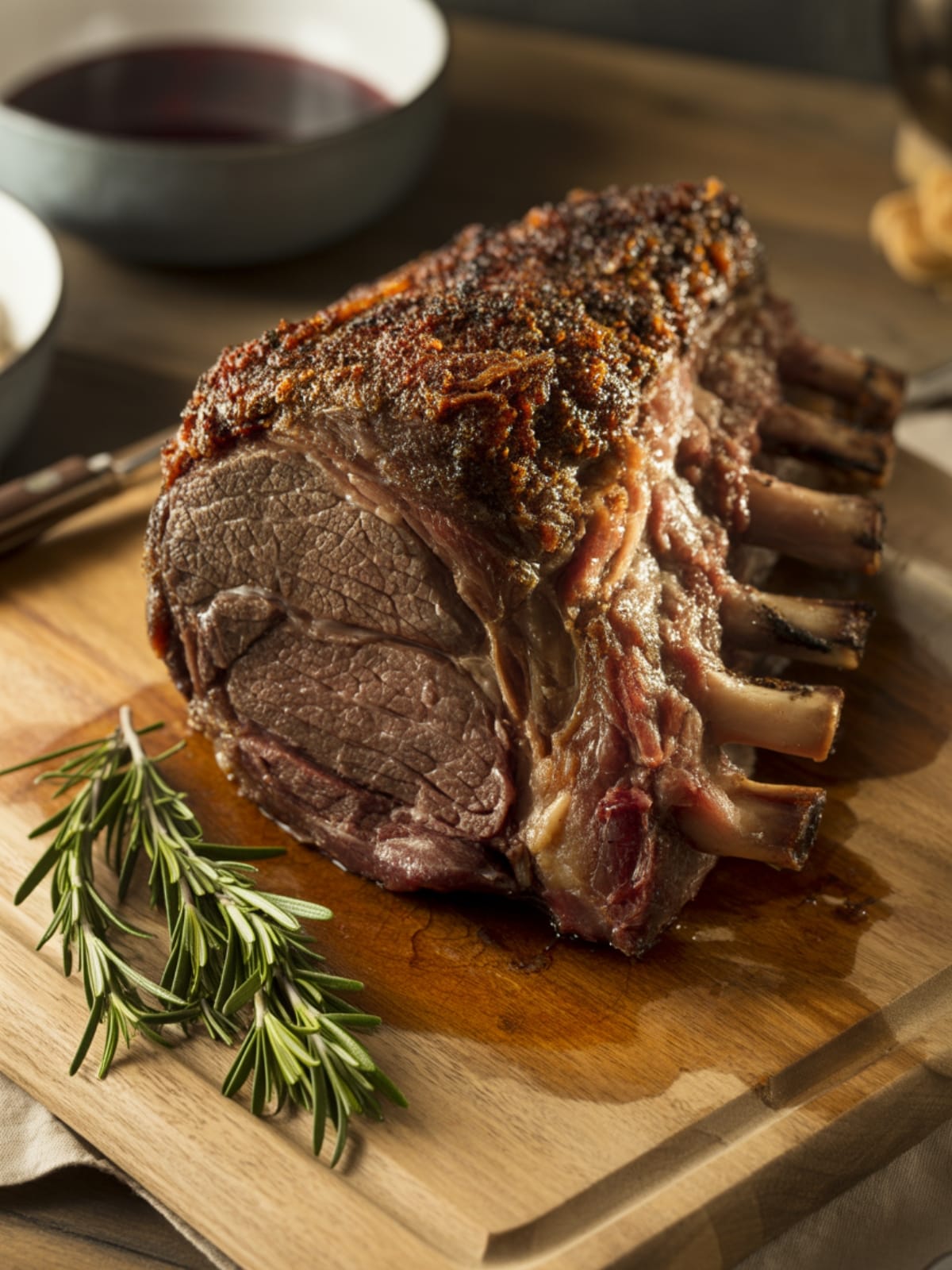
The Classic Christmas Prime Rib isn’t just dinner—it’s a celebration on a platter. What makes this recipe truly special is how it transforms a premium cut of beef into something extraordinary using surprisingly simple techniques. The herb crust creates an intensely flavorful exterior while the reverse-sear method ensures perfect edge-to-edge doneness every single time. Unlike many holiday centerpieces that require constant attention, this prime rib mostly cooks unattended, freeing you to enjoy time with your guests. The combination of that buttery-tender texture, rich beefy flavor, and impressive presentation makes this a recipe worthy of your most special gatherings.
Equipment needed: Roasting pan, meat thermometer, kitchen twine, cutting board, sharp carving knife
Classic Christmas Prime Rib
Ingredients
- 1 5-7 pound bone-in prime rib roast (ask for the first cut or “small end”)
- 2 tablespoons kosher salt
- 2 tablespoons fresh ground black pepper
- 6 cloves garlic minced
- 3 tablespoons fresh rosemary finely chopped
- 2 tablespoons fresh thyme leaves
- 1/4 cup olive oil
- 2 tablespoons Dijon mustard
- 1 tablespoon Worcestershire sauce
- 2 tablespoons unsalted butter softened
Instructions
- Prepare the roast 24 hours ahead by removing it from packaging, patting it completely dry with paper towels, and placing it on a wire rack set over a baking sheet. Season generously with kosher salt on all sides, then refrigerate uncovered overnight. This crucial step creates a dry exterior that will brown beautifully and seasons the meat throughout.
- Remove the prime rib from the refrigerator 3 hours before cooking to allow it to come to room temperature. A cold roast will cook unevenly and require more time in the oven.
- Preheat your oven to 250°F (121°C) and position a rack in the lower third of the oven. Lower temperatures ensure gentle, even cooking for the perfect pink interior.
- Prepare the herb paste by combining the garlic, rosemary, thyme, black pepper, olive oil, Dijon mustard, and Worcestershire sauce in a small bowl. The mustard acts as an emulsifier and helps the herbs adhere to the meat.
- Pat the roast dry again, then rub the softened butter all over the surface of the meat, focusing on the top and sides where the fat cap is located.
- Apply the herb paste generously over the entire surface of the buttered roast, pressing gently to adhere. If your roast is tied, make sure to get some of the mixture between the strings.
- Place the roast bone-side down in a large roasting pan. The bones create a natural rack that allows air circulation and even cooking.
- Insert a reliable meat thermometer into the thickest part of the meat, being careful not to touch bone, which will give a false reading.
- Slow-roast until the thermometer reads 120°F (49°C) for medium-rare or 130°F (54°C) for medium, approximately 3-4 hours depending on the size of your roast. This slow cooking method ensures even doneness from edge to edge.
- Remove the roast from the oven and tent loosely with foil, allowing it to rest for at least 30 minutes. During this time, increase your oven temperature to 500°F (260°C).
- Return the rested roast to the very hot oven for 10-15 minutes until the exterior is deeply browned and crisp. Watch carefully to prevent burning the herb crust.
- Transfer to a cutting board and remove the kitchen twine if present. Carve by slicing along the bones to remove them (you can serve these separately), then slice the meat across the grain to your desired thickness.
Notes
- For best results, ask your butcher for a “first-cut” or “small-end” rib roast, which comes from closer to the loin and is generally more tender.
- The overnight salting (dry-brining) technique is essential for deep flavor penetration and moisture retention.
- If you don’t have a leave-in meat thermometer, check the temperature periodically, but try to open the oven door as infrequently as possible.
- Save the bones and any drippings for making beef stock or enhancing gravy.
- This roast can be prepared up to the slow-roasting stage several hours ahead, then finished with the high-heat sear just before serving.
Calories & Nutritional Info
- Calories per serving: Approximately 450-550 calories per 6-ounce serving
- Protein: 40-45g per serving
- Fat: 30-35g per serving (primarily from the natural marbling of the beef)
- Carbohydrates: Less than 2g per serving
- Allergens: Contains dairy (butter) and mustard
- Diet suitability: Keto-friendly, gluten-free, paleo-compatible
Common Mistakes to Avoid
- Skipping the resting period – A proper rest of at least 30 minutes allows juices to redistribute throughout the meat; cut too soon and you’ll lose those precious juices to your cutting board.
- Cooking straight from refrigerator temperature – Cold meat cooks unevenly and can remain raw in the center while overcooking on the outside.
- Relying on cooking time alone rather than using a meat thermometer. Prime rib is too expensive to guess!
- Positioning the roast fat-side down – The fat cap should always face upward so it melts and bastes the meat during cooking.
- Seasoning just before cooking – The overnight salting makes a tremendous difference in flavor penetration and texture.
Alternatives & Substitutions
- Herb variations: If you don’t have fresh herbs, use 1 tablespoon dried rosemary and 1 tablespoon dried thyme, but the flavor won’t be quite as vibrant.
- Boneless option: You can use a boneless rib roast, but reduce cooking time by approximately 30 minutes and place it on a rack in your roasting pan.
- Dairy-free: Substitute the butter with olive oil or beef tallow for a dairy-free version.
- Budget-friendly: For a more affordable option, try this method with a well-marbled eye of round roast, but reduce cooking time accordingly as it’s a leaner cut.
- Make-ahead option: Prepare the herb paste up to 2 days in advance and refrigerate in an airtight container.
FAQs
How do I know which size prime rib to buy?
Calculate about 1 pound per person for a bone-in roast (or about 8 ounces per person for a boneless one). This accounts for shrinkage during cooking and ensures you’ll have some leftovers, which are absolutely delicious the next day.
Can I cook my prime rib to well-done?
Technically yes, by cooking to an internal temperature of 150°F (66°C), but I strongly recommend medium-rare to medium for this expensive cut. Prime rib becomes noticeably tougher and loses its signature buttery texture when cooked beyond medium.
Do I really need to leave it uncovered in the refrigerator overnight?
Yes! This step, called dry-brining, allows the salt to penetrate deep into the meat while the air circulation dries the exterior, which creates the perfect surface for browning. The difference is remarkable.
What sides pair best with Classic Christmas Prime Rib?
Traditional companions include Yorkshire pudding, horseradish cream sauce, roasted potatoes, and green vegetables like Brussels sprouts or asparagus. The rich flavor of prime rib pairs wonderfully with these sides.
Can I use the drippings to make gravy?
Absolutely! The flavorful drippings make an exceptional au jus or gravy. Simply skim excess fat, deglaze the pan with red wine or beef stock, reduce, and strain for a perfect accompaniment.
How should I store and reheat leftovers?
Store leftover prime rib tightly wrapped in the refrigerator for up to 4 days. For best results, reheat slices gently in a 250°F oven until just warm, about 10-15 minutes. Avoid microwaving, which will overcook this prized meat.
Final Thoughts
A Classic Christmas Prime Rib is more than just dinner—it’s a celebration of tradition, craftsmanship, and the joy of bringing people together around something truly special. Don’t be intimidated by this showstopper; with these techniques in your culinary arsenal, you’ll create a meal that becomes the stuff of family legend. The moments around your holiday table, with that perfectly pink slice of beef on everyone’s plate, are what memories are made of.